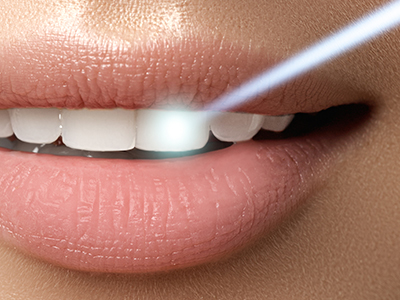
Laser dentistry uses focused light energy to treat soft tissue with remarkable precision. Because a laser seals tissue as it works, procedures typically involve less bleeding, less swelling, and often no sutures, and many patients heal faster and feel less sore afterward than with traditional techniques. We use lasers where the evidence supports better outcomes, always with patient comfort in mind.
Lasers are versatile tools for a range of soft-tissue procedures, including:
Each procedure has specific indications, and the decision to use a laser is always tailored to your individual situation.
Lasers cauterize as they cut, which limits bleeding, lowers swelling, and keeps the treatment area clear so the clinician can work precisely. Because nerves and small blood vessels are sealed during treatment, many patients report less soreness and a shorter recovery than after scalpel-based procedures.
Traditional instruments are still the right choice in some cases, the tool is always a clinical judgment based on your anatomy, the treatment goal, and your preferences. When tissue conservation and quick recovery are priorities, a laser is often the gentler option.
Before any laser procedure, we review your medical and dental history and explain the recommended approach. Local anesthesia can be used depending on the treatment and your comfort level. During the appointment, a compact handpiece delivers the light energy; the effect is localized, and many treatments are completed in minutes.
Afterward, care instructions focus on gentle hygiene and what to watch for as you heal. Because laser-treated tissue tends to swell and bleed less, most patients return to normal activities quickly. A follow-up visit confirms the site is healing as expected.
Safe laser dentistry depends on proper training, the right device for the task, and careful protocols. Clinicians are educated in laser physics, tissue interaction, and safety measures such as eye protection and controlled beam delivery. Different lasers are designed for different jobs, some for soft tissue, others for bacterial reduction, and settings are chosen to balance effectiveness with tissue preservation.
We will always explain why a laser is recommended, review your alternatives, and outline expected results and aftercare so you can make an informed decision about your treatment.