
Sports Mouthguards

Custom protection for active smiles

A custom sports mouthguard is more than a piece of plastic, it is protective equipment made to fit your exact bite. Because it is tailored to your mouth, it stays in place during play far better than an over-the-counter guard, reducing the risk of chipped or knocked-out teeth and soft-tissue injuries. A well-fitting guard also spreads impact forces across the whole dental arch and may help limit abrupt jaw movement in collisions.

Why custom beats boil-and-bite

Store-bought guards offer quick protection, but they rarely match the stability or comfort of a professionally made device. Comfort matters more than it sounds: athletes who can speak and breathe easily actually keep the guard in, which is the whole point of wearing one.

Custom guards are made from durable, medical-grade materials chosen for shock absorption, and they can be designed with different thicknesses for different sports, thicker for high-contact sports like football, hockey, and martial arts; slimmer where breathing and communication come first. Athletes with braces get extra clearance around brackets and wires, protecting both the mouth and the orthodontic work.

What the fitting involves

The process is quick and comfortable. We start with a short evaluation of your teeth and bite, noting any restorations or orthodontic appliances that affect the design. A digital scan or impression captures the precise shape of your dental arches, and the guard is fabricated to that model.

At delivery, we try the guard in and make small adjustments so it is stable without pressure points or gagging, then review home care, storage, and when to plan for replacement. For growing kids and teens, periodic checks make sure the guard keeps fitting as teeth and jaws change.

Caring for your mouthguard

Simple habits keep a guard clean and effective:

  • Rinse with cool water after each use and brush gently with a soft toothbrush
  • Store it in a ventilated case, away from heat, never boil a custom guard
  • Check regularly for cracks, thinning, or a loose fit

Mouthguards do not last forever. Lifespan depends on the material, how often it is worn, and your bite, so bring the guard to regular dental visits so we can check its condition and fit. When it is time for a new one, updated scans make replacement fast.

A practical investment in dental health

By preventing traumatic injuries, a custom mouthguard helps you avoid far more invasive restorative work later, preserving natural teeth and protecting previous dental work. Athletes who clench or grind can also have the guard designed to protect the jaw joint and tooth surfaces. If you or a family member plays sports, contact us to learn more or to arrange a personalized fitting.
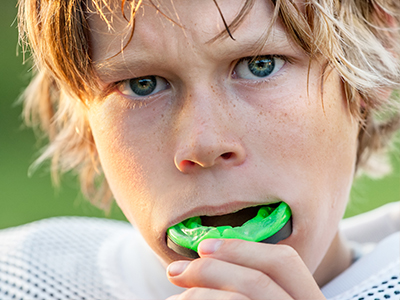
Sports mouthguards, Kary Dental

Our Office

Frequently Asked Questions

What is a sports mouthguard and why is it important?

A sports mouthguard is a removable protective device made from resilient plastic that fits over the teeth to absorb and distribute impact forces. It reduces the risk of broken teeth, lacerations to the lips and cheeks, and injuries to the tongue and jaw during athletic activity. Mouthguards also help protect existing dental restorations and can limit the severity of craniofacial trauma by dispersing direct blows.

Wearing a properly fitted mouthguard is one of the most effective preventive measures athletes can take to protect their oral health. It is recommended for participants in contact and collision sports as well as recreational activities where falls or projectiles are possible. Consistent use during both practice and competition significantly lowers the likelihood of emergency dental visits and long-term damage.
There are three primary categories of mouthguards: stock mouthguards, boil-and-bite mouthguards, and custom mouthguards made by a dental professional. Stock guards are preformed and ready to wear but often fit poorly, while boil-and-bite devices can be softened and shaped to the teeth for a better fit. Custom mouthguards are fabricated from impressions or scans of a patient’s teeth and provide the most precise fit and protection.

Each type offers a different balance of convenience, comfort, and protection, so the right choice depends on the athlete’s needs, the sport played, and any existing dental conditions. Athletes with braces, extensive dental work, or a history of dental injury typically benefit most from a custom device. A dental professional can help evaluate which option best matches performance and safety priorities.
A sports mouthguard is recommended for anyone participating in activities with a risk of impact to the face, teeth, or jaw, including organized contact sports, recreational leagues, and certain extreme or adventure activities. Children and adolescents are particularly vulnerable because their teeth and jaws are still developing. Mouthguards are also advisable for athletes who participate in sports with fast-moving objects, hard surfaces, or frequent player-to-player contact.

Coaches, parents and athletes should treat mouthguard use as standard safety equipment alongside helmets and pads in applicable sports. Players who have had previous dental injuries, restorations, or orthodontic appliances should discuss custom options with their dentist to ensure appropriate protection. Properly fitted mouthguards reduce both immediate injury risk and long-term dental consequences.
Custom mouthguards generally provide superior protection, comfort and retention compared with stock or boil-and-bite options because they are made from precise impressions or digital scans of the patient’s teeth. The tailored fit minimizes movement during play, improves breathing and speech, and lowers the chance of soft-tissue injuries. Custom devices are also designed to accommodate individual dental anatomy, restorations and orthodontic needs.

While boil-and-bite guards can offer an affordable improvement over stock models, they often lack the durability and exact fit of a custom appliance. For athletes who need reliable long-term protection, particularly those in high-contact sports or with special dental considerations, a custom mouthguard is the preferred choice recommended by dental professionals. The improved fit can also increase compliance because athletes are more likely to wear a comfortable device consistently.
The process begins with a clinical evaluation to assess oral health, dental restorations and any orthodontic appliances that could affect fit. A dental impression or a digital intraoral scan is then taken to capture an accurate record of the teeth and bite relationship, which serves as the basis for the custom appliance. The laboratory or in-office milling process uses that model to fabricate a mouthguard with the appropriate thickness and material layering for shock absorption and durability.

After fabrication, the mouthguard is tried in and adjusted chairside to ensure a secure fit, proper occlusion and comfortable margins that do not irritate soft tissues. The clinician verifies that breathing and speech are not overly restricted and makes any necessary refinements. Follow-up checks are recommended after initial wear and periodically to confirm continued fit as dental conditions change.
Rinse your mouthguard with cool water immediately after use and brush it gently with a soft toothbrush and mild soap or nonabrasive toothpaste to remove debris and bacteria. Avoid hot water and harsh chemicals, which can warp or degrade the material. Store the mouthguard in a ventilated case to protect it from contamination and keep it away from direct heat and sunlight.

Inspect the device regularly for cracks, thinning or distortion, and replace it if you notice any damage or if it no longer fits snugly. Do not leave your mouthguard in a gym bag or locker where it can be exposed to contaminants or pet damage. Bring the mouthguard to dental visits so the clinician can examine it and advise on cleaning or replacement as needed.
A well-fitting mouthguard should fit snugly without constant conscious effort, stay in place during movement, and allow normal breathing and speech. It should cover the teeth it is intended to protect without excessive bulk or sharp edges that irritate soft tissues. If the mouthguard shifts, causes discomfort or interferes with your athletic performance, it likely needs adjustment or replacement.

Replace the mouthguard if you see wear, tears, or permanent deformation, or after major dental work or orthodontic changes that alter fit. For growing children and adolescents, more frequent replacement may be necessary to accommodate dental development. Regular evaluation by your dental provider will help determine the appropriate replacement interval for your specific situation.
Yes. Patients with braces, bridges, implants or other dental restorations often require a mouthguard designed to offer additional coverage and cushioning to protect both the appliance and surrounding tissues. Orthodontic mouthguards have extra space or softer liner materials to prevent brackets from cutting the lips or cheeks and to reduce force against the brackets and wires.

Custom fabrication is especially valuable for patients with orthodontic appliances because the device can be tailored to the appliance and adjusted as treatment progresses. Your dental provider can recommend the best design and materials to protect oral appliances while maintaining comfort and function during athletic activity.