
Orthodontics

Straighter teeth, healthier bite, brighter smile

Our orthodontic care focuses on healthy, functional smiles for teens and adults, with options that prioritize comfort, predictability, and long-term stability. Every case begins with a careful evaluation and a treatment plan you can review before starting, including a digital scan instead of messy impressions, so you know what to expect at each stage.

Clear aligner therapy

Clear aligners straighten teeth using a sequence of custom, removable trays that move teeth in small, controlled steps. Because the trays are removable, it is easier to brush, floss, and eat normally than with fixed braces. Aligners can address a wide range of alignment issues and mild-to-moderate bite problems; small attachments or elastics are sometimes used to achieve specific movements.

Compliance matters, aligners work best when worn on the prescribed schedule, so we discuss realistic expectations and daily wear times up front. We are not contracted with any single aligner brand: we select aligner systems for clinical performance, which gives us the freedom to treat your case the way we believe it should be treated.

Our orthodontic care includes:

  • Clear aligner treatment planning and monitoring
  • Orthodontic retainers after treatment

When traditional braces make better sense

Fixed brackets and wires remain the most predictable option for certain movements and complex bite corrections, significant rotations, vertical corrections, or cases involving growth guidance in younger patients. Choosing the appliance is a clinical decision, not a stylistic one: we evaluate your anatomy, history, and goals to recommend what will actually achieve the best result.

Some patients benefit from a hybrid approach, using braces for certain phases and aligners or retainers for finishing and long-term maintenance.

Technology that improves predictability

Digital tools have transformed orthodontic planning. Intraoral scanning produces precise 3D models used for planning, simulations, and appliance fabrication, and lets us show you a projected path for your teeth before treatment begins. When appropriate, 3D imaging helps us anticipate challenges such as root position and bone support.

Monitoring is ongoing, not hands-off. Regular check-ins, in person or with secure digital monitoring when appropriate, verify that movement is proceeding as planned so we can adjust course early and keep your timeline realistic.

Retention and long-term care

Straightening teeth is only part of the story. Teeth naturally shift throughout life, so a sound retention plan, fixed or removable retainers, is essential to preserve your results, and we plan for it from day one. Retainers are provided and fitted as part of aftercare, with a strategy tailored to your bite and gum health.

Long-term follow-up includes periodic checkups and retainer assessments. If minor shifting occurs over the years, conservative touch-up options can restore the original result. Throughout, we coordinate orthodontic care with your general dental health so alignment supports a lasting, healthy smile.
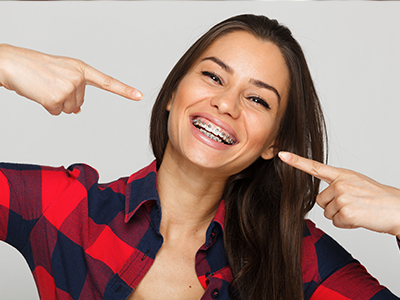
Orthodontics, Kary Dental

Our Office

Frequently Asked Questions

What is orthodontics and how does it improve oral health?

Orthodontics is the dental specialty focused on diagnosing, preventing, and correcting misalignment of the teeth and jaws. The primary goals are to achieve functional bite relationships, improve ease of cleaning, and support long-term oral health. Straight, well-aligned teeth reduce areas where plaque can accumulate and help protect the teeth and supporting tissues from undue wear and trauma.

Orthodontic care uses custom appliances to apply controlled forces that move teeth into healthier positions over time. Treatment is planned to preserve tooth structure and periodontal support while restoring efficient chewing and clear speech. Modern techniques prioritize patient comfort and predictable outcomes through careful assessment and stepwise adjustments.
Contemporary orthodontics offers a range of appliances, including conventional metal braces, tooth-colored ceramic brackets, lingual braces that sit behind the teeth, and clear removable aligners. Additional tools such as self-ligating systems, temporary anchorage devices (TADs), and specialized springs or wires expand the ability to address complex tooth movements. The choice of appliance depends on the clinical goals, the patient’s preferences, and the biomechanics required for the case.

Advances in imaging and laboratory technology, including 3-D CBCT, intraoral scanners, and digital treatment planning, have improved precision and predictability. These technologies allow clinicians to visualize jaw relationships, simulate tooth movement, and fabricate custom appliances that fit more accurately. The result is often faster diagnosis, fewer adjustments, and a more comfortable patient experience.
Candidates for orthodontic treatment include children, teens, and adults who have spacing or crowding, bite discrepancies, protruding teeth, or functional problems such as difficulty chewing or speech issues. Age alone does not exclude someone from treatment; many adults successfully complete orthodontic therapy when their teeth and supporting structures are healthy. The key determinants are the nature of the alignment problem and the overall condition of the teeth and gums.

A comprehensive evaluation will assess tooth alignment, jaw relationships, periodontal health, and any restorative needs that should be addressed before or during treatment. Patients with active gum disease, untreated decay, or insufficient bone support typically require stabilizing dental care prior to starting orthodontics. With proper planning and interdisciplinary coordination, most alignment concerns can be managed safely and effectively.
Orthodontic specialists generally recommend an initial evaluation by about age 7, when early signs of bite problems and jaw growth irregularities can be identified. At this stage a child typically has a mix of permanent and baby teeth, which allows a clinician to detect developing issues such as severe crowding, crossbites, or premature loss of baby teeth. Early assessment helps determine whether immediate intervention is needed or whether monitoring is appropriate.

Not every child requires early treatment, but timely observation can make interceptive options more effective when growth modification is beneficial. When indicated, early treatment can guide jaw development, correct harmful oral habits, and create room for erupting permanent teeth. If no early therapy is required, the dentist will continue periodic monitoring and recommend treatment when development is more favorable.
Treatment duration varies widely depending on the complexity of the problem, the chosen appliance, the patient’s growth potential, and their adherence to instructions. Minor tooth movements may be completed in a few months, while comprehensive correction of a full malocclusion commonly requires one to three years of active treatment. Regular follow-up visits are scheduled to adjust appliances and monitor progress toward the treatment goals.

Compliance with the prescribed wear schedule for removable appliances or aligners, maintaining excellent oral hygiene, and attending scheduled appointments all contribute to efficient progress. After active tooth movement is complete, a retention phase using fixed or removable retainers is necessary to stabilize results and prevent relapse. Long-term follow-up helps ensure that the functional and aesthetic outcomes are maintained.
During an orthodontic consultation the clinician will perform a thorough oral exam, take diagnostic records such as photographs, x-rays or 3-D scans, and review dental and medical history. These records allow the clinician to evaluate tooth alignment, jaw relationships, and any contributing factors like tooth loss or periodontal concerns. The consultation also includes a discussion of the patient’s goals and a review of potential treatment approaches tailored to the specific case.

Based on the examination, the clinician will outline recommended options, expected treatment timeline, necessary preparatory dental care, and the retention strategy after active treatment. When appropriate, the orthodontist will coordinate care with general dentists, periodontists, or oral surgeons to address restorative needs or skeletal discrepancies. The result is an individualized plan designed to achieve a stable, functional, and attractive outcome.
Clear aligners are custom-made, removable trays that sequentially shift teeth into place and are valued for their esthetic discreetness and ease of oral hygiene. Because aligners are removable, patients can brush and floss normally and eat without appliance restrictions, but they must wear the trays for the recommended daily hours to achieve the planned tooth movement. Traditional braces use brackets and wires that are fixed to the teeth and can sometimes offer greater control for certain complex movements.

Not all cases are equally suited to aligner therapy; severe rotations, large vertical movements, or certain bite corrections may be more predictable with fixed appliances or require adjunctive devices. Many clinicians use a hybrid approach, combining aligners with attachments, interproximal reduction, or temporary anchorage to achieve specific results. The best option is determined during the diagnostic phase and depends on biomechanical needs and patient preferences.
Retainers are essential for maintaining the position of teeth after active orthodontic movement by allowing the surrounding tissues and fibers to reorganize. Without retention, teeth have a natural tendency to shift back toward their original positions due to elastic fibers, muscular forces, and normal jaw function. The retention phase protects the investment made during active treatment and helps preserve both function and aesthetics over time.

Retainers may be removable (worn full-time initially, then at night) or fixed bonded wires that provide continuous support behind the teeth. The specific type and duration of retention are selected based on the pretreatment condition and the movements achieved during therapy. Ongoing monitoring and occasional adjustments ensure the retainer continues to fit and performs as intended.