
Laser Dentistry

Precise, comfortable treatment with faster healing

Laser dentistry uses focused light energy to treat soft tissue with remarkable precision. Because a laser seals tissue as it works, procedures typically involve less bleeding, less swelling, and often no sutures, and many patients heal faster and feel less sore afterward than with traditional techniques. We use lasers where the evidence supports better outcomes, always with patient comfort in mind.

What we treat with dental lasers

Lasers are versatile tools for a range of soft-tissue procedures, including:

  • Gum recontouring, reshaping gum tissue to improve a gummy smile or expose more of a tooth, with clean margins and natural-looking healing
  • Frenectomy, releasing a tight band of tissue under the tongue or lip; the laser cuts and seals in one pass, so the procedure is quick with minimal bleeding
  • Oral lesions, removing or biopsying small growths or sores
  • Periodontal treatment, reducing bacteria in gum pockets and reshaping pocket tissue to encourage reattachment

Each procedure has specific indications, and the decision to use a laser is always tailored to your individual situation.

How laser care compares with traditional methods

Lasers cauterize as they cut, which limits bleeding, lowers swelling, and keeps the treatment area clear so the clinician can work precisely. Because nerves and small blood vessels are sealed during treatment, many patients report less soreness and a shorter recovery than after scalpel-based procedures.

Traditional instruments are still the right choice in some cases, the tool is always a clinical judgment based on your anatomy, the treatment goal, and your preferences. When tissue conservation and quick recovery are priorities, a laser is often the gentler option.

What to expect at your visit

Before any laser procedure, we review your medical and dental history and explain the recommended approach. Local anesthesia can be used depending on the treatment and your comfort level. During the appointment, a compact handpiece delivers the light energy; the effect is localized, and many treatments are completed in minutes.

Afterward, care instructions focus on gentle hygiene and what to watch for as you heal. Because laser-treated tissue tends to swell and bleed less, most patients return to normal activities quickly. A follow-up visit confirms the site is healing as expected.

Safety and training

Safe laser dentistry depends on proper training, the right device for the task, and careful protocols. Clinicians are educated in laser physics, tissue interaction, and safety measures such as eye protection and controlled beam delivery. Different lasers are designed for different jobs, some for soft tissue, others for bacterial reduction, and settings are chosen to balance effectiveness with tissue preservation.

We will always explain why a laser is recommended, review your alternatives, and outline expected results and aftercare so you can make an informed decision about your treatment.
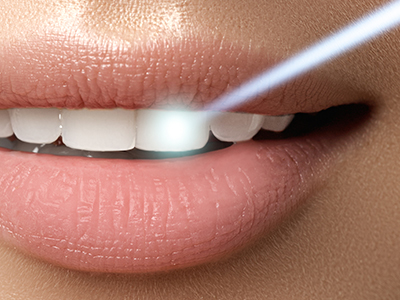
Laser dentistry, Kary Dental

Our Office

Frequently Asked Questions

What is laser dentistry?

Laser dentistry uses concentrated light energy to treat both soft and hard tissues in the mouth, allowing clinicians to perform a range of procedures with precision and control. Different types of dental lasers produce specific wavelengths that interact with tissue in controlled ways to cut, vaporize, or coagulate as needed. Because lasers can target only the affected area, they often preserve more healthy tooth and gum structure than some traditional instruments.

In practice, lasers are used for tasks such as removing decay, reshaping soft tissue, treating periodontal pockets, and assisting in certain restorative procedures. The technology can also play a role in activating in-office whitening systems and in performing biopsies or lesion removals. While lasers expand treatment options, they are not a universal substitute for conventional dental tools and techniques.
Dental lasers are versatile and can address a variety of oral health concerns including tooth decay removal in select situations, soft tissue reshaping, frenectomies, and treatment of small oral lesions. They are commonly used in periodontal therapy to reduce bacteria and diseased tissue, and they can assist with biopsy procedures by enabling precise tissue sampling. Lasers also help in certain restorative steps, such as curing resin materials or preparing tooth surfaces.

Beyond clinical procedures, lasers are frequently used to enhance patient comfort by reducing bleeding and swelling during soft tissue interventions and by accelerating some healing processes. They can also be part of cosmetic treatments, for example when contouring gum tissue to improve a smile line. Not every diagnosis or procedure is appropriate for a laser, so the dentist will determine suitability on a case-by-case basis.
Dental lasers generate focused light energy at specific wavelengths that interact with the water, pigment, or mineral content of oral tissues to achieve the desired clinical effect. When directed at tooth structure, some lasers excite water molecules inside the tissue causing micro-ablation of decayed material without the mechanical vibration of a drill. When applied to soft tissue, lasers can cut or coagulate by vaporizing cells and sealing small blood vessels simultaneously.

Different wavelengths are chosen for their affinity to hard or soft tissues, and the device settings are adjusted by the clinician for power, pulse duration, and repetition rate to control the depth and intensity of the effect. This ability to tailor the parameters is what enables precise treatment while minimizing collateral damage. Proper operator training and protocol selection are essential for safe and effective laser use.
When used by trained dental professionals following established protocols, laser dentistry is considered a safe and effective adjunct to conventional treatments. Devices intended for dental use undergo evaluation for safety and performance, and clinicians receive specific training on wavelengths, tissue interactions, and appropriate settings. Protective measures such as eye protection for the patient and staff are standard practice whenever a laser is in use.

Like any clinical tool, lasers have limitations and must be selected based on the clinical situation to avoid unintended tissue damage. The dentist will assess your oral health, medical history, and the targeted treatment area to determine whether a laser is appropriate. If a laser is not suitable, the clinician will recommend alternate, evidence-based treatment options.
Many patients experience less discomfort with laser procedures compared with some traditional approaches because lasers can reduce mechanical vibration, pressure, and heat. For minor soft tissue work or small decay removals, local anesthesia may not be necessary, though sensitivity and pain thresholds vary among patients. The clinician will discuss anesthesia options and use topical or local anesthetics when indicated to ensure patient comfort.

For more extensive procedures or when treating areas with heightened sensitivity, anesthesia is commonly used as a precaution to achieve a comfortable experience. Patients who are anxious about dental care should let the team know so appropriate behavior management or sedation alternatives can be considered. Postoperative discomfort, when it occurs, is typically mild and managed with standard aftercare instructions.
Side effects from dental lasers are generally limited and transient, including slight swelling, temporary sensitivity, or mild discomfort at the treatment site. Because lasers can seal small blood vessels and nerve endings, bleeding is often reduced and some postoperative pain can be minimized compared with traditional cutting methods. Rarely, improper use of a laser can cause excessive thermal damage to adjacent tissues, which is why operator training and correct device settings are important.

Patients with certain medical conditions or those taking specific medications should inform the dental team so potential interactions or contraindications can be evaluated. The dentist will review aftercare guidelines to promote healing and will schedule follow-up as needed to monitor recovery. If any unexpected symptoms occur after a laser procedure, patients should contact the office promptly for assessment.
Many patients are suitable candidates for laser treatment, but candidacy depends on the specific condition being treated, the location and extent of the problem, and the type of laser required. Children and adults who are apprehensive about drills or who have bleeding disorders can sometimes benefit from laser therapies that reduce bleeding and anxiety. A comprehensive clinical exam and review of medical history are necessary to determine appropriateness.

Certain factors such as the need for deep or complex restorative work, extensive infections, or anatomical limitations may make traditional instruments or combined approaches a better choice. Pregnant patients and those with certain implants or photosensitive conditions should disclose those details during evaluation. The dentist will recommend the safest and most effective treatment plan tailored to each patient’s needs.
In periodontal care, lasers are used to remove inflamed or infected soft tissue, reduce bacterial load in periodontal pockets, and promote a cleaner healing environment. Laser-assisted periodontal procedures can target diseased tissue while preserving healthy gum and supporting structures, and they often result in reduced bleeding and postoperative discomfort. Some laser protocols focus on debridement and disinfection of pockets as part of a comprehensive periodontal treatment plan.

Laser therapy is typically combined with conventional periodontal measures such as scaling and root planing, improved oral hygiene, and ongoing maintenance care. The dentist or periodontist will evaluate pocket depth, tissue condition, and overall periodontal health to determine whether laser adjunctive therapy is indicated. Long-term success depends on appropriate follow-up and patient adherence to home care recommendations.