
Dental Lab

In-house craftsmanship for faster, better-fitting restorations

Behind every well-fitting crown, bridge, or denture is careful laboratory work. When the clinical team and the lab work from the same digital records and shared goals, restorations come back looking natural, fitting comfortably, and needing fewer adjustments. Our practice combines an integrated lab workflow, specialized design partners, and on-site digital manufacturing so your restoration is planned, made, and checked with the same care at every step.

Digital design and specialized lab partners

For advanced cases such as full-arch prostheses and highly aesthetic smile makeovers, we collaborate with specialized CAD design laboratories. These technicians refine the shape, contours, and bite of a restoration in a virtual environment before anything is physically made, which reduces chairside adjustments and helps appointments run smoothly and predictably.

Clear communication makes the partnership work. Annotated digital scans, photographs, and defined shade and texture goals travel with each case, so the lab and the dental team are always working from the same high-resolution information. The result is a prosthesis that meets both functional requirements and your aesthetic expectations.

On-site milling and 3D printing

Digital manufacturing lets us choose the right process for each case. Durable zirconia restorations are milled in-house on a Perfit Ovis mill, a platform known for consistent accuracy and surface finish. For provisional frameworks, models, surgical guides, and complex removable components, we use a RapidShape Pro 20 3D printer, which excels at detailed parts and rapid iteration.

Keeping manufacturing close to the clinical team shortens turnaround times and keeps quality checks in-house. When a case needs fine-tuning, we can adjust and reproduce parts quickly, improving fit and function without long waits between appointments.

Clinician-led verification and delivery

Technology alone doesn’t guarantee a successful restoration, clinical judgment completes the process. Every prosthesis is checked by hand before delivery, including:

  • Marginal fit against the prepared tooth
  • Bite (occlusion) and contacts with neighboring teeth
  • Aesthetic blending with the surrounding smile

When needed, we make chairside refinements, polishing, bite adjustment, and minor contouring, before final cementation or attachment. Small corrections at this stage improve comfort right away and reduce the need for follow-up visits.

Quality assurance from start to finish

Quality checks run through the entire workflow, from verifying scan accuracy to inspecting each milled or printed component against objective standards for durability, biocompatibility, and appearance. Materials are chosen for long-term performance: high-strength zirconia for load-bearing teeth, carefully selected polymers for temporaries and guides, and precision attachments for removable solutions.

Digital records also make patient education easier, you can see how a proposed restoration will look and function before it’s made. By combining specialized lab expertise with in-office oversight, we deliver restorations that are dependable, comfortable, and built to last. Contact us to learn more about how our dental lab workflow supports your care.
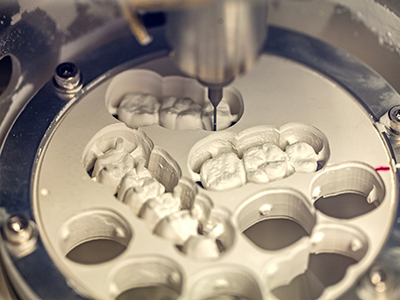
Dental milling machine, Kary Dental

Our Office

Frequently Asked Questions

What is an onsite dental lab and how does it benefit patients?

An onsite dental lab is a fully equipped laboratory located within or adjacent to the dental practice where technicians fabricate and customize restorations and appliances. By working in close proximity to the clinical team, lab technicians can collaborate directly with dentists to refine fit, shape and esthetics throughout the fabrication process. This close collaboration helps the practice deliver restorations that meet individual functional and cosmetic goals.

At Kary Dental, having an onsite lab allows the team to oversee every stage of production and respond quickly to clinical observations during treatment. Patients benefit from more accurate communication between clinician and technician, reduced delays in adjustments, and a consistent approach to quality control. The result is restorations that integrate seamlessly with a patient’s natural smile and oral function.
An in-house dental lab can produce a wide range of restorations and prostheses, including crowns, bridges, veneers, inlays and onlays, partial and full dentures, night guards and other removable appliances. The lab can also work on implant restorations, creating custom abutments and implant-supported prostheses designed to match the patient’s anatomy. Many labs are equipped to handle both traditional and digital workflows to support various materials and clinical needs.

Because the lab is integrated with the clinical team, technicians can adapt designs to specific smile goals and functional requirements while maintaining precise control over fit and occlusion. This integrated approach supports restorative longevity and patient comfort. It also allows for tailored solutions when standard off-the-shelf components are not adequate for a patient’s situation.
An onsite lab typically shortens the time needed for communication, adjustments and remakes by eliminating delays associated with offsite shipping and remote consultations. Dentists and technicians can meet in person to review cases, refine shade matches and make immediate adjustments, which often reduces the number of visits required for final fitting. For patients this translates to a more streamlined experience and fewer interruptions to daily life.

While specific timelines vary by case complexity and material, the logistical advantages of an in-house lab support faster problem-solving and more efficient scheduling. The office can prioritize urgent repairs or temporary solutions when necessary, providing continuity of care. Patients should discuss expected timelines for their particular restoration with the clinical team during treatment planning.
Accurate color matching combines clinical shade selection, digital imaging and the technician’s skill in layering restorative materials to mimic natural tooth structure. In an onsite lab setting, dentists and technicians can evaluate shade under clinical lighting, compare photographs and make iterative adjustments together to achieve an optimal match. This hands-on process is particularly valuable for visible anterior restorations where esthetics are a primary concern.

Technicians use a combination of shade guides, digital shade-mapping tools and material selection to reproduce translucency, surface texture and hue. The collaborative environment enables quick refinements before final cementation or delivery, which reduces the need for subsequent corrections. Patients are encouraged to participate in shade decisions when possible to ensure the final result meets their expectations.
Onsite dental labs commonly work with a variety of materials including dental ceramics, zirconia, porcelain-fused-to-metal, composite resins and acrylics for removable prostheses. Digital technologies such as CAD/CAM design, intraoral scanning, and in-office milling or 3D printing are increasingly integrated to enhance precision and reproducibility. These tools allow technicians to produce consistent restorations that meet modern standards for fit and strength.

Technicians combine digital processes with traditional hand-layering and characterization techniques to achieve lifelike esthetics and optimal function. Material selection is guided by the clinician based on the patient’s clinical needs, occlusion and esthetic goals. The result is a customized restoration that balances durability, appearance and biocompatibility.
Collaboration begins at treatment planning and continues through impression taking, model fabrication and final finishing. Dentists and technicians exchange detailed case notes, photographs and digital scans, and they meet to review margins, occlusion and esthetic parameters so that the restoration aligns with the clinical plan. This iterative dialogue ensures that laboratory work addresses both functional and cosmetic expectations before delivery.

When adjustments are needed, the proximity of an onsite lab allows for same-day consultations and rapid modification of the restoration. Clear communication about shade, contour and fit reduces the likelihood of unexpected adjustments at the time of placement. Patients benefit from a coordinated team approach that emphasizes precision and predictable outcomes at every step.
An onsite lab improves the practice’s ability to provide prompt repairs and expedited replacements when restorations or appliances are damaged. Because the laboratory team is available for assessment and repair work, the practice can often prioritize urgent cases and implement temporary or definitive solutions more quickly than waiting for external lab shipping. This responsiveness helps restore function and comfort with minimal disruption.

The lab evaluates the nature of the damage and determines whether a repair is appropriate or whether fabrication of a new restoration is necessary. In many cases technicians can repair chips, reline dentures or adjust fit in a single visit or with a short follow-up, depending on the complexity. Patients should contact the office promptly after damage occurs so the clinical team can assess and coordinate the appropriate laboratory response.
An onsite lab can fabricate custom abutments and work closely with the restorative team to design implant-supported crowns, bridges and full-arch prostheses that align precisely with the implant position and occlusal scheme. Technicians review digital scans, implant analogs and clinical records to create components that deliver proper emergence profile, esthetics and function. This collaborative environment is particularly important for achieving soft-tissue harmony around implant restorations.

Customization reduces the need for off-the-shelf compromises and allows for prostheses tailored to a patient’s unique anatomy. Digital workflows enable accurate transfer of implant positions from the mouth to the lab for predictable fit. The clinical team and lab coordinate to confirm restorative margins and occlusion before final delivery to ensure long-term success.