
Dental Bridges

A fixed solution for one or more missing teeth

A dental bridge fills the gap left by one or more missing teeth, restoring both appearance and everyday function. When a tooth is lost, neighboring teeth can drift, the opposing tooth can over-erupt, and chewing and speech may change, shifts that create new places for food and bacteria to collect, raising the risk of decay and gum disease. A well-designed bridge keeps your bite stable and protects your long-term oral health.

Types of bridges

Several designs are available, and the right one depends on the health of the surrounding teeth, bone levels, and your goals:

  • Traditional fixed bridges use crowns on the teeth adjacent to the gap to support a replacement tooth between them, predictable and effective when those teeth are strong and healthy
  • Cantilever bridges anchor to one adjacent tooth when only one side offers reliable support
  • Implant-supported bridges rest on dental implants instead of natural teeth, preserving neighboring tooth structure and providing a feel closest to natural teeth, especially useful for larger gaps

Removable partial dentures are another category, but fixed and implant-supported bridges generally offer better stability and a more natural bite.

Planning with modern diagnostics

Successful bridge treatment starts with thorough planning. Cone-beam CT imaging provides three-dimensional views of bone volume, tooth roots, and nearby anatomy, essential when implants are being considered. Digital intraoral scanning replaces messy putty impressions with a precise digital model, improving comfort and fit. These tools let your clinician simulate different approaches, show you the expected outcome, and, when implants are planned, guide the surgery so each fixture lands in the ideal position for long-term function and esthetics.

Placement and timeline

For a traditional bridge, the adjacent teeth are prepared and scanned, a temporary restoration protects them while the final bridge is made, and the finished bridge is then fitted and adjusted for your bite. Implant-supported bridges begin with a surgical phase, followed by a healing period while the bone integrates with the implants; once healing is confirmed, the final bridge is attached. Digital workflows can shorten the restorative steps, though implant healing time remains an important part of ensuring a stable result.

Caring for your bridge

Daily hygiene is the key to a long-lasting bridge. Cleaning under and around the replacement tooth, with floss threaders, interdental brushes, or a water irrigator, keeps the supporting teeth or implants and the surrounding gums healthy. Regular dental visits let the team check fit, function, and tissue health, and catch wear or gum changes early, when they are easiest to address. With good home care and routine follow-up, a bridge can provide years of comfortable, reliable service and a smile that looks and works like your own.
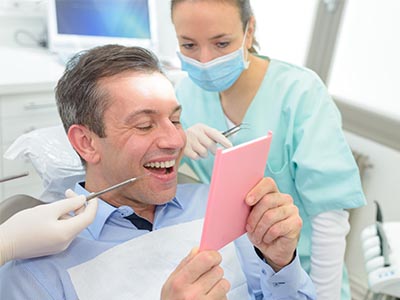
Dental bridges, Kary Dental

Our Office

Frequently Asked Questions

What is a dental bridge and how does it work?

A dental bridge is a fixed restoration that replaces one or more missing teeth by anchoring artificial teeth, called pontics, to adjacent support teeth or dental implants. The support teeth, or abutments, are fitted with crowns that are connected to the pontics to form a single, unified restoration. Implant-supported bridges use dental implants in place of natural abutment teeth to provide support and avoid altering adjacent healthy teeth.

By restoring the missing tooth structure, a bridge helps reestablish chewing efficiency, speech, and the natural appearance of your smile. Bridges also prevent nearby teeth from drifting into the empty space, which can change your bite and make oral hygiene more difficult. At the office of Kary Dental, we explain how each bridge type functions so patients can choose the option that best meets their functional and aesthetic goals.
Good candidates for a dental bridge are patients who have one or more missing teeth and generally healthy adjacent teeth or sufficient bone for implant support. Adequate gum health and the absence of uncontrolled periodontal disease are essential before bridge placement. The final determination depends on a clinical exam, dental imaging, and an evaluation of overall oral health.

If adjacent teeth are strong and healthy, a traditional fixed bridge may be appropriate; if not, implant-supported solutions can avoid altering natural teeth. Other factors such as tooth position, bite, and long-term oral hygiene habits are considered when creating a treatment plan. Your dentist will review alternatives like partial dentures or implants to select the most predictable option.
Common types of dental bridges include the traditional fixed bridge, implant-supported bridge, cantilever bridge, and resin-bonded (Maryland) bridge. A traditional fixed bridge is supported by crowns on both sides of the gap, while a cantilever attaches to a crown on only one side of the pontic. The Maryland bridge relies on a metal or ceramic framework bonded to the back of adjacent teeth and is often used for small cosmetic gaps.

Implant-supported bridges replace the need to prepare neighboring teeth by using dental implants as abutments and are often recommended for longer spans or when adjacent teeth are not suitable for crowns. The choice of bridge depends on the number of missing teeth, the condition of neighboring teeth, and patient preferences regarding durability and conservation of tooth structure. Your dentist will explain which type aligns best with your clinical needs.
Preparing for a traditional fixed bridge begins with a comprehensive diagnostic evaluation that may include X-rays, intraoral photos, and impressions or digital scans. On preparation day, the abutment teeth are reshaped to create room for full-coverage crowns, and local anesthesia keeps the procedure comfortable. A precise impression or digital scan is taken to fabricate the custom bridge.

A temporary bridge is placed to protect prepared teeth, maintain aesthetics, and help you function while the permanent restoration is being made. Some patients experience mild sensitivity and gum soreness after preparation, which usually resolves within days to weeks. It is important to follow post-procedure care instructions and avoid very sticky or hard foods while wearing a temporary restoration.
Implant-supported bridge treatment typically begins with detailed planning and 3D imaging to determine ideal implant positions and to assess bone volume. The surgical placement of implants is performed on an outpatient basis and may involve local anesthesia, sedation options, and, if necessary, bone grafting to prepare the site. Postoperative care includes instructions for managing swelling, diet, and oral hygiene during the healing phase.

After implant placement, a period of osseointegration, usually several months, allows the implants to fuse with the jawbone before the final bridge is attached, though temporary restorations are sometimes used sooner. During treatment, your care team will monitor healing and make any needed adjustments to ensure proper fit, function, and aesthetics. At Kary Dental, we use advanced imaging and stepwise planning to help patients understand each phase and feel confident about the process.
The lifespan of a dental bridge varies with the type of materials used, the quality of oral hygiene, and the forces placed on the restoration, with many bridges lasting a decade or longer with proper care. Regular dental checkups and professional cleanings are important to spot early signs of wear, decay around abutment teeth, or gum disease that could compromise the bridge. Good habits reduce the risk of complications and help extend the service life of the restoration.

Maintaining the supporting teeth and the underlying bone is essential for long-term success; patients should follow brushing and interdental cleaning recommendations closely. Avoiding habits that place excessive stress on the bridge, such as biting very hard objects or using teeth as tools, reduces the chance of fracture. Your dentist will discuss realistic expectations and a recall schedule to keep the bridge and surrounding tissues healthy.
An implant-supported bridge offers the advantage of preserving adjacent natural teeth and providing stimulation to the jawbone, which helps prevent bone loss over time. It typically delivers superior long-term stability and is particularly beneficial for larger gaps or when neighboring teeth are not suitable for crowns. The main limitations are the need for adequate bone, a surgical procedure, and a longer treatment timeline compared with some other options.

A traditional fixed bridge requires shaping healthy adjacent teeth to support crowns, which can be a disadvantage if those teeth are structurally sound and otherwise healthy. However, traditional bridges can be completed more quickly and without the need for surgery, making them a predictable solution for many patients. Weighing these trade-offs with your dentist ensures you choose a treatment that balances conservation of tooth structure, durability, and treatment time.
Daily care for a dental bridge includes brushing twice a day with a soft-bristled toothbrush and cleaning between teeth and under the pontic using floss threaders, interdental brushes, or a water flosser. Cleaning beneath the bridge is critical because trapped food and plaque can lead to decay of the abutment teeth and gum inflammation. Fluoride toothpaste and an antibacterial mouthwash may be recommended to support oral health.

In addition to daily cleaning, maintain regular dental visits so the dentist can check the fit and condition of the bridge and perform professional hygiene care. If you notice looseness, persistent sensitivity, or signs of gum disease, contact the office promptly to address issues before they worsen. Good home care combined with professional oversight significantly improves the long-term success of a bridge.